Client Background
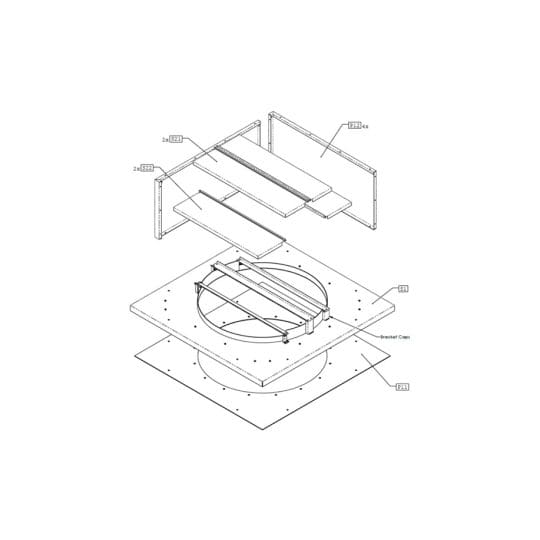
The client is a UK manufacturer of urban cycling infrastructure, supplying local authority and public-sector programmes nationally. Their core product is a secure, modular cycle storage unit, specified by councils as part of active travel schemes and now a recognised feature of UK streetscapes.
Demand is high in volume and uneven in timing. A single local authority framework can lift a month’s call-off well above the normal run rate, and monthly volume can vary by a factor of three between the quietest and busiest periods. The product is one steel assembly produced at volume, with a cost base dominated by raw material. Volume is concentrated on a single product, and cost is mostly dominated by a commodity, so this leaves the supply chain exposed to whatever moves the steel price.
Client Brief
The client’s board was looking for a supply position that would hold up against that backdrop. The brief, in effect, was to find a commercial model that could absorb market movement, and gave transparency around the mitigations and/or value engineering initiatives where possible .

The challenge
The relationship had run for years on conventional terms. Purchase orders covered short horizons and pricing reopened periodically against market conditions, with each renegotiation taking weeks of commercial effort on both sides. Demand surges had to be resourced quickly, and through the quiet periods the cost of standing capacity sat with us.
That pattern put pressure on the two things the client needs most from us, which are pricing they can predict and defend internally, and confidence that they will always have supply. Carbon border pricing, energy costs, and currency movements have since made the forward cost of imported steel goods harder to forecast.
The carbon cost of imported steel is changing. The carbon cost of imported steel is changing. EU CBAM entered its definitive phase in January 2026. The UK CBAM takes effect from January 2027.
Download our briefing on what it means for UK supply chains.
Our approach
Discovery
Director-level conversations established what each side needed. The client wanted cost transparency and confidence they were not paying through cycle peaks they could not see. We needed forward visibility on demand to commit to capacity, hold raw material, and keep a stable workforce through the trough. Both sides were willing to redesign the commercial model rather than keep trading concessions inside the old one.

The mechanism
Raw material pricing is indexed to MEPS, the independent steel price index published from Sheffield and used across the industry to settle contracts. Each quarter we share the indexed movement of materials used on their product and the weighted material portion it applies to. Movement of more than five per cent in either direction adjusts the price, while smaller movements accumulate into the following quarter. The index is public, so the client sees the same numbers we do.
Non-material inflation, covering wages, transport, premises, compliance, and outside processing, is reviewed annually against published ONS indicators and supplier evidence. We share the method and the resulting movement with the client, while we manage internal costings and margins.
In return, the client provides a 12-month rolling forecast and holds six to nine months of active purchase order cover. That gives us the ability to commit capacity and to buy steel directly from the mills rather than through stockists when the indexing signal shows this to be favourable.
Quarterly business reviews keep the arrangement in order, and we bring indexed movement, design-for-manufacture opportunities, joint efficiency initiatives and forward demand are standing agenda items, to these reviews so that all data is visible to everyone involved.

Technical spotlight
Indexed pricing as engineered commercial infrastructure
Challenge
In a market where steel, energy, freight, and currency all move on different cycles, periodic renegotiation either lags the market or overshoots it. Both outcomes erode trust. The client needs pricing they can defend internally. The supplier needs pricing that reflects current cost.
Approach
Apply MEPS to the material portion of the batch price and an agreed composite adjustment mechanism to the remaining portion, drawing on published ONS indicators and supplier evidence where relevant. Set a movement threshold (±5%) on the material side below which adjustments accumulate. Build the review cycle around the data.
Result
Pricing now tracks market reality on a quarterly cadence, with movement evidenced rather than negotiated. The first full QBR cycle under the new model surfaced material efficiency gains that were shared back through indexed pricing, alongside a small inflationary adjustment that the indexing mechanism made straightforward to explain.

The Results
The partnership delivered structural change across both businesses.
- A forecastable production base. Twelve months of rolling forecast and six to nine months of PO cover turn public-sector demand cycles into a planning horizon we can invest against.
- Cost movement evidenced rather than negotiated. Material is tracked quarterly against a public index and non-material inflation is reviewed annually against published indicators. This means movement becomes predictable and both parties are always working to the same figures.
- Value engineering initiatives were identified and implemented through the QBR process. This brought pricing close to that of the prior year despite increases in material cost.
- Forward purchasing capability. Demand visibility supports direct mill purchasing on key feedstock, with the margin difference flowing back into the indexed price.

"Working with CEL has enabled us to build a more transparent and resilient supply chain. Through regular review meetings, collaborative value engineering, and a transparent commercial framework, they have become a trusted partner in helping us navigate demand fluctuations and material market changes."
The Partnership Today
The agreement is in its first full year of operation. The same framework is built to extend to other strategic accounts where forward visibility and a defensible pricing method matter more than a quoted price.
For UK manufacturers facing carbon border pricing, energy volatility, and currency exposure on imports, the case for indexed partnership is straightforward. Cost predictability comes from a mechanism that tracks the cycle openly, on published indices both parties can see, with the operational discipline to act on what those indices say.
Supply chain stability is a commercial engineering problem. Let’s build the solution.