Client Background
The client is a manufacturer of galvanised steel plant support frames specified on commercial and industrial flat-roof projects worldwide. Their products carry HVAC units, ductwork, piping, and mechanical plants that respect the structural requirements on virtually every large commercial roofing programme.
Client Brief
Specified by consulting engineers and M&E contractors across major commercial programmes, the product range has become a de facto standard in their industry, which means demand is high in volume and volatile in timing. When a large contract is awarded, the call on stock can be immediate.
The challenge was to build a domestic counterweight to their offshore model. A UK-based manufacturing partner can respond in weeks and hold its price in sterling.
The Challenge
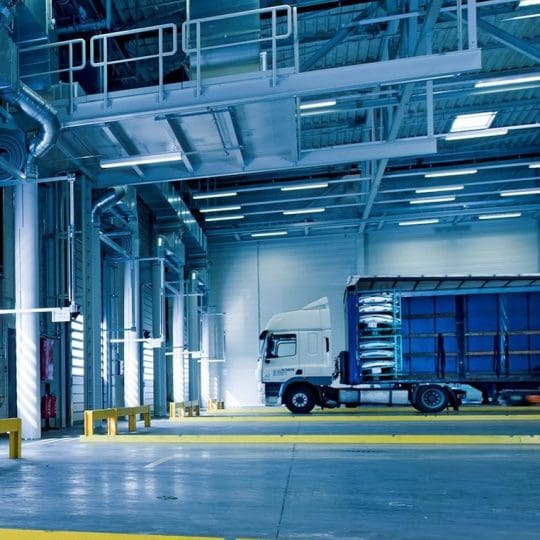
The offshore model required 26 weeks of material commitment at any one point: four weeks of production in China, four weeks of callable stock held at the factory, ten weeks in transit, and eight weeks of UK buffer stock held by the client to keep live projects covered. Not all of that is lead time in the conventional sense, as with stock buffers in place, the client could call off material without waiting for the full production cycle. But the cost of underwriting 26 weeks of pipeline sits quietly in working capital. When a large contract lands and consumes the UK and China buffers, the true replenishment lead time – 14 weeks, production to door – is all that’s left between the business and a project it cannot supply.
The cash exposure ran further than inventory. Overseas production typically requires payment upfront, before production starts, or before goods ship, which pulls cash out of the business earlier and for longer than the physical pipeline alone suggests. Contracts Engineering’s flexible payment terms put some of that cash back where it belongs — in the business, not tied up waiting on a shipment.
The client already had a UK supplier, but the relationship had not delivered the flexibility they needed when demand surged. Sterling-yuan FX movements made landed cost forecasting difficult. Freight disruption, such as container shortages, port delays, and trade policy uncertainty, introduced risks that no amount of buffer stock could fully absorb.
The objective was a domestic option that guaranteed continuity of supply when project demand spiked – a dual source they could call on without rebuilding a supply chain from scratch each time.
The Approach
Discovery
We engaged the client’s procurement and engineering teams through face-to-face meetings and structured calls, working through annual usage data, component specifications, and the pressure points in their supply chain. A design-for-manufacture assessment confirmed the range’s suitability for UK production. We focused on identifying where a domestic partner would make the most practical difference to their existing supply chain. The goal was to cover the flanks that offshore arrangements, however cost-competitive, were structurally unable to protect.
Engineering Solution
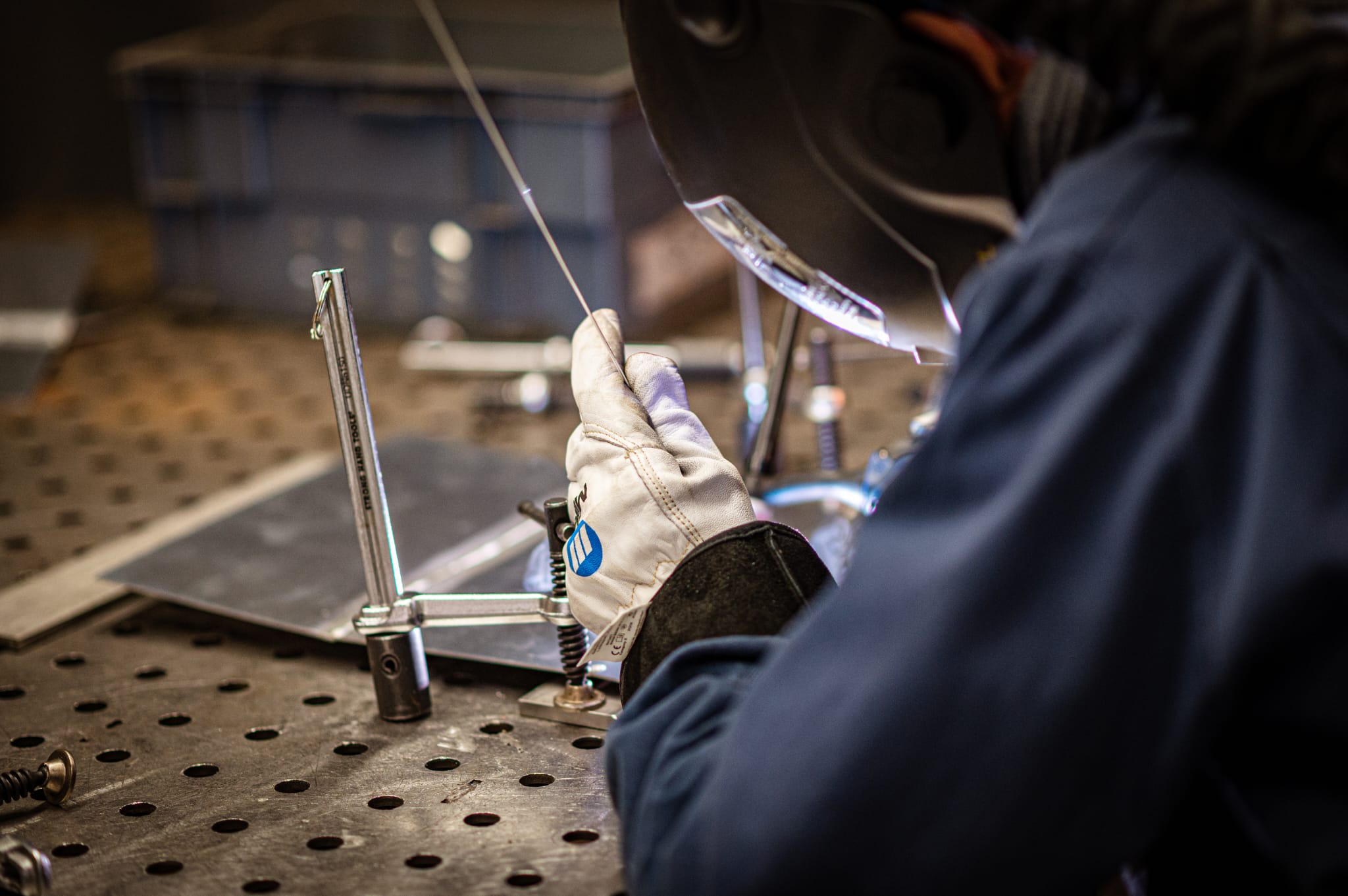
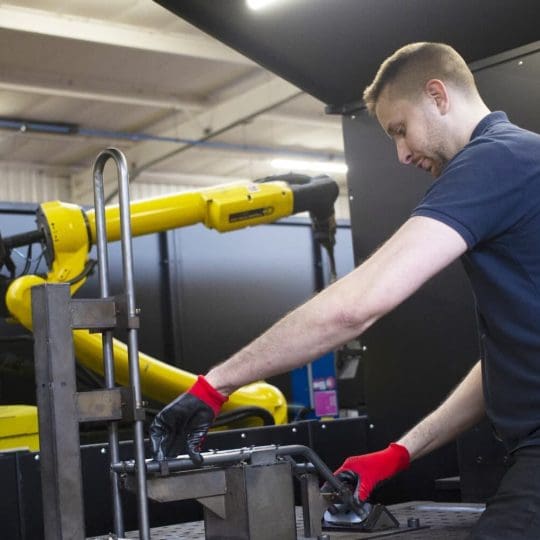
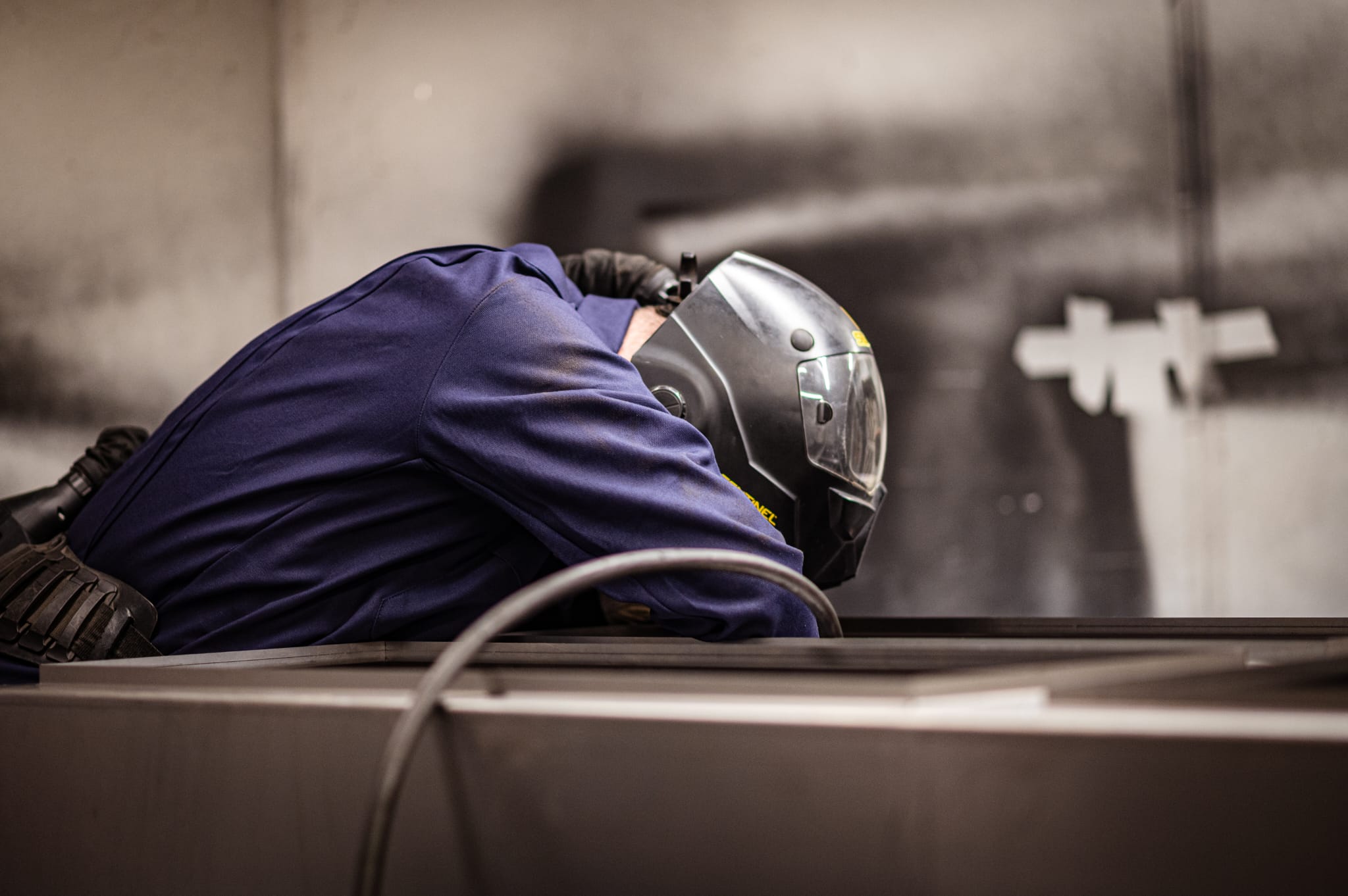
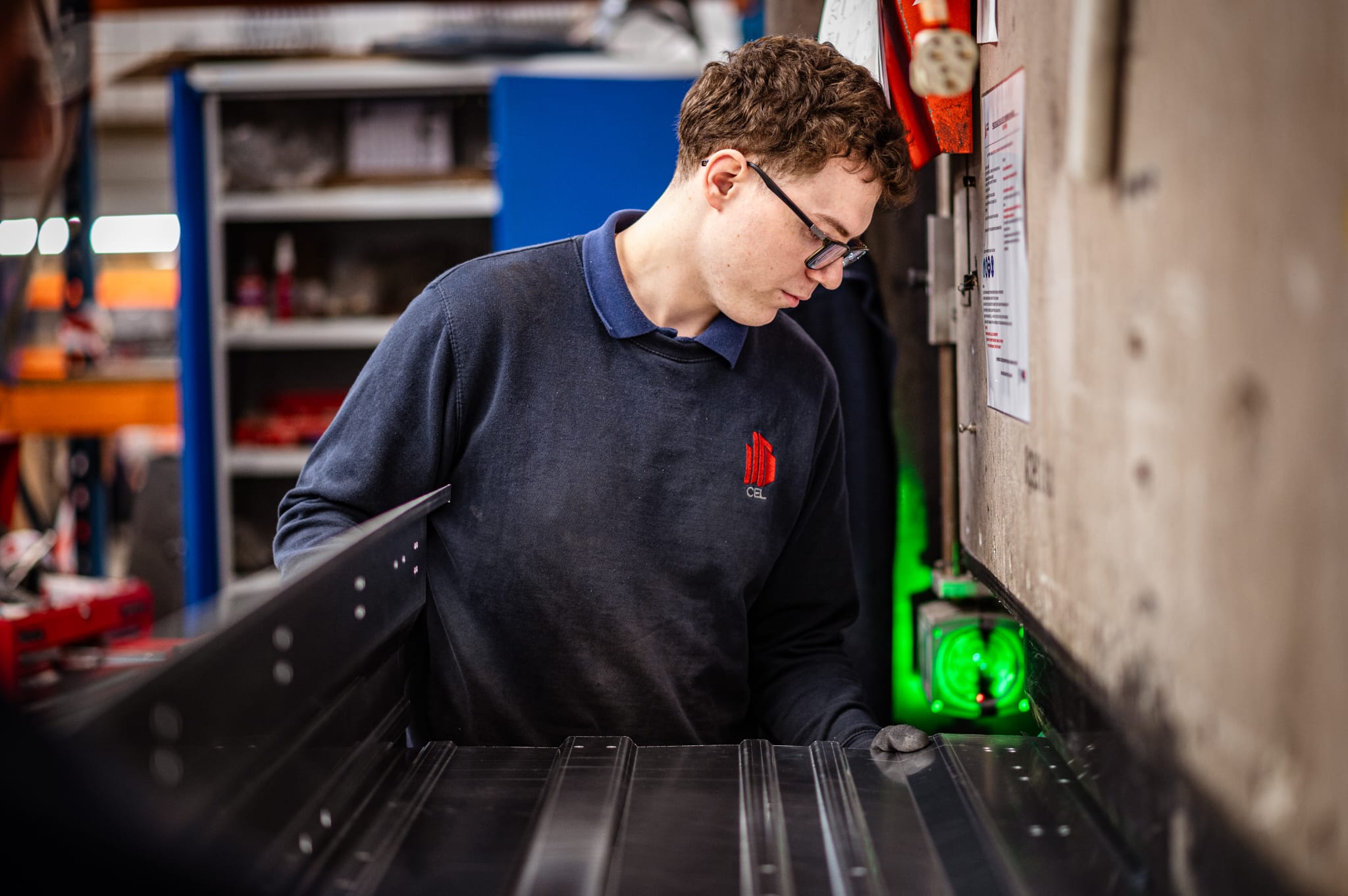
The rooftop support-frame components – rectangular hollow section tube with robotically welded gusset plates in three standard lengths (1200mm, 1500mm, and 1700mm) – are well suited to our robotic welding cells. We manufactured purpose-built jigs for these cells, locking in positional accuracy and weld repeatability from first article through to full batch production. The manufacturing process covers cutting, folding, welding (manual and robotic), hot-dip galvanising through our audited supply chain, and fitment of rubber base pads. The tooling investment is made once. The production benefit recurs on every order.
Operational Design
We secured mill-length feedstock for two months of supply on key components and aligned tube manufacturing capacity and galvanising schedules upstream. The production model is designed to absorb monthly demand fluctuations without requiring the client to hold UK buffer stock, delivering a repeatable three-week production cycle. Full NPI protocols governed first-article production from the outset; FAM review, sample approval, and batch inspection, with dedicated jigs completed during that phase. From the second order, all production enters without a setup clock running. The client has a single point of contact and direct communication throughout.
Technical Spotlight: Robotic Welding for Structural Components
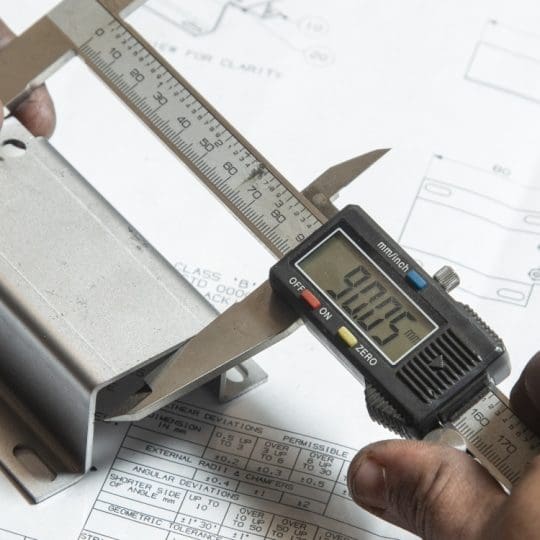
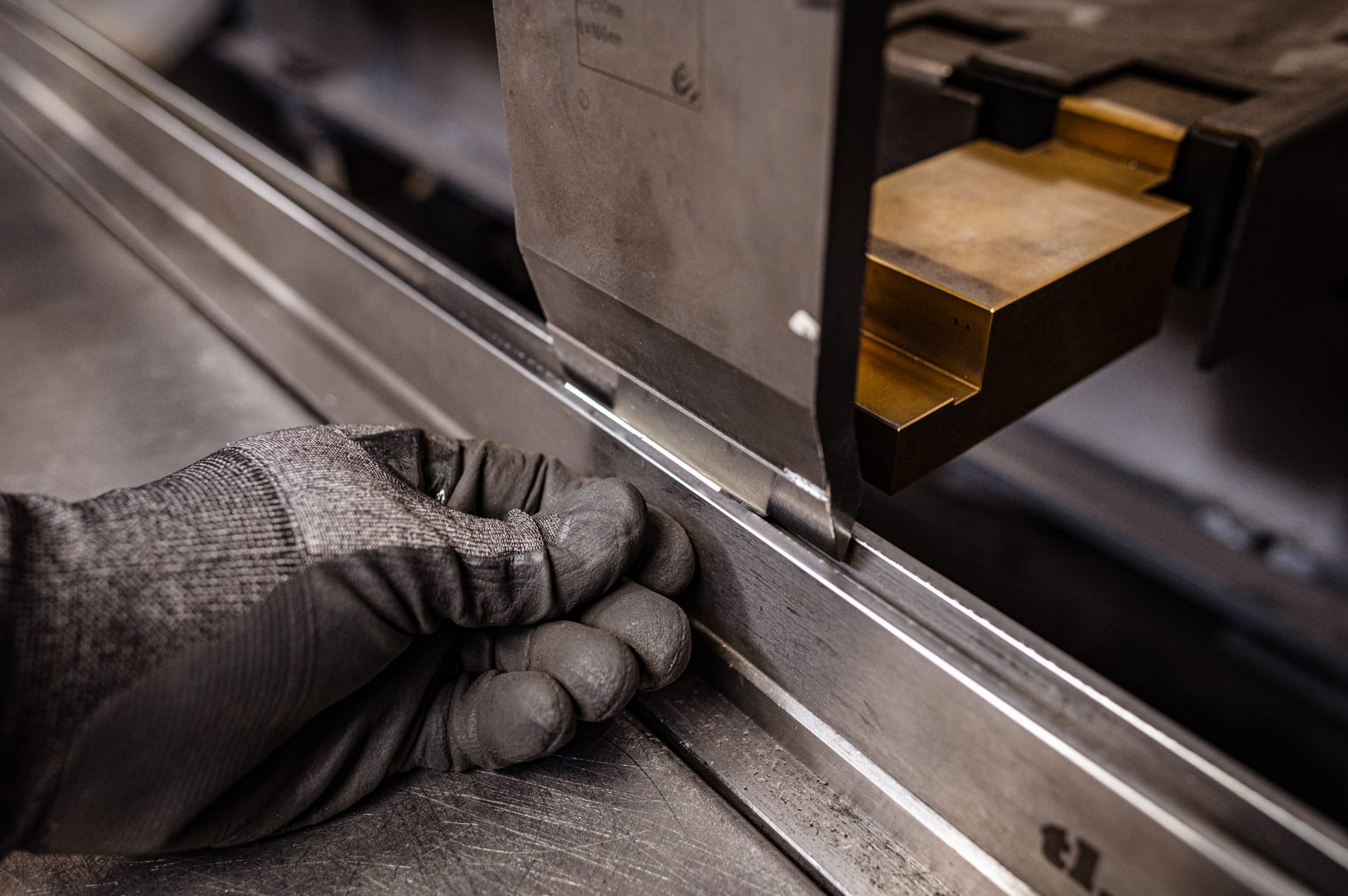
Challenge: Individual components are bolted together on site with no assembly-stage correction available on site. Every welded length must be dimensionally correct when it leaves the factory. The tolerance is ±0.50mm. At volume, consistency demands the elimination of operator variation. Robotic welding removes the variable.
Approach: We programmed each component variant for our robotic welding cells and manufactured dedicated fixtures to hold tube and gusset plates in position throughout the weld cycle. First-article geometry becomes batch geometry. The fixture holds every dimension; the programme repeats every weld path.
Result: Weld quality and dimensional accuracy are consistent unit to unit, batch to batch. Jigs are built. Programmes are proven. Subsequent orders enter production with no setup lead time, holding ±0.50mm across every length.
The Results
The partnership delivered measurable improvements across lead time, working capital, and supply chain resilience:
- Supply chain exposure reduced from 26 weeks of committed material to a 3-week UK production cycle. Eliminating the 14-week replenishment gap that opened whenever buffer stock was consumed.
- Working capital freed. With less stock in transit and less held in UK storage, capital previously locked into a slow conversion cycle is now available for deployment elsewhere.
- Payment terms extended from upfront overseas payments to flexible terms on UK-sourced volumes.
- Currency and freight risk eliminated on UK-sourced volumes. Sterling pricing fixed at order replaces the FX variance that made landed cost forecasting unreliable.
- Supply resilience improved. A working dual-source model now protects against demand spikes, shipping disruption, and geopolitical uncertainty on UK-sourced volumes.
- Production-ready for repeat orders from the second order. With jigs built and programmes proven, all subsequent orders enter production immediately.
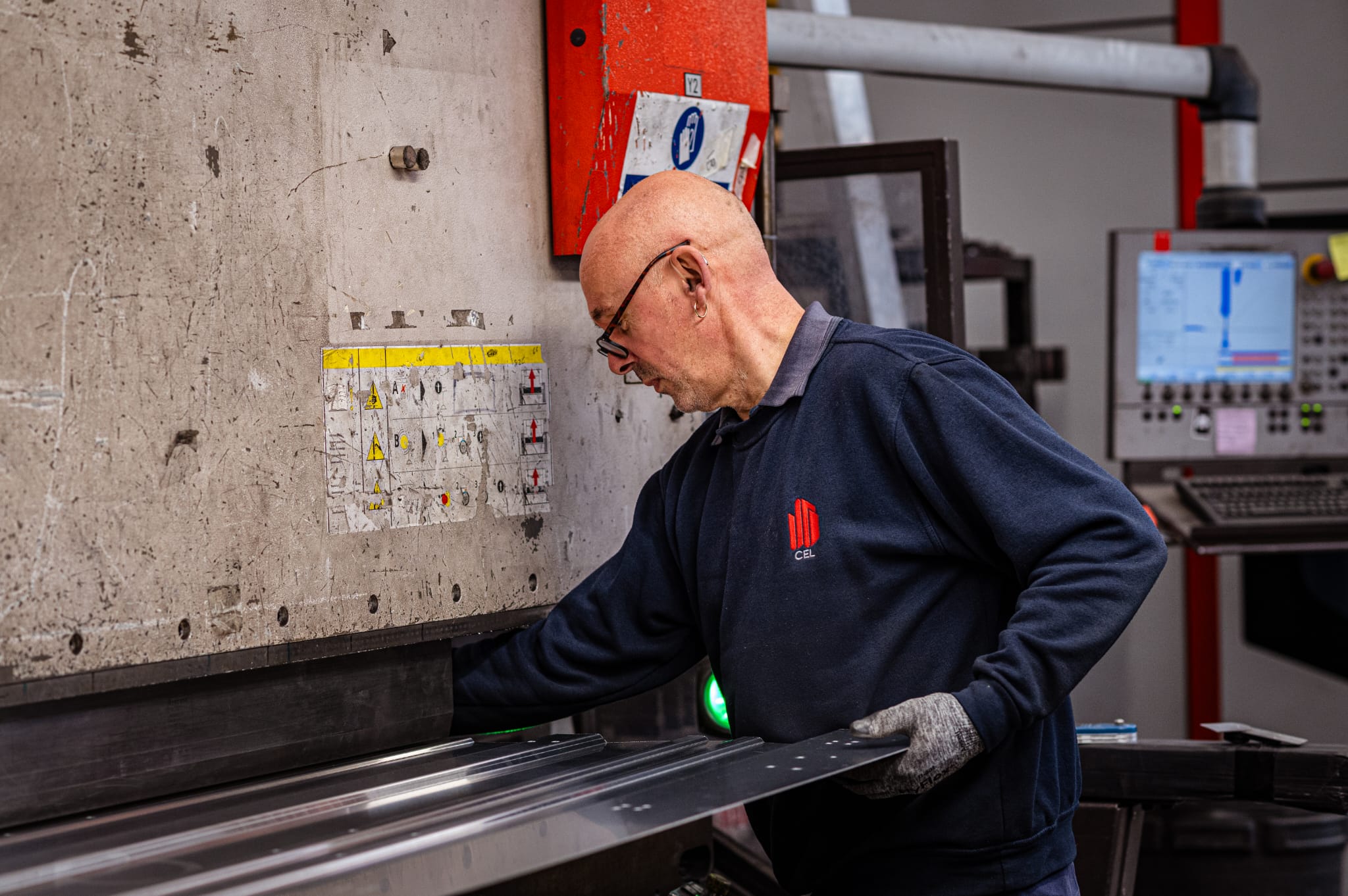
“We split the first order across both UK suppliers while the jigs were being built. Tooling's done now. Next call-off goes straight into production, three weeks to despatch, priced in sterling. That's our replenishment cycle now.”
The Partnership Today
An overflow arrangement has grown into a standing dual-source partnership; the kind of strategic reshoring that adds resilience without eroding the cost base that offshore production provides. The client now has a domestic supply option they can call on whenever project demand outpaces the offshore pipeline, with tooling in place, programmes proven, and a production cycle aligned to their demand profile. Each order reinforces a supply chain that becomes more responsive with use, not less.
This client moved from 26 weeks of supply chain exposure to a 3-week production cycle. That is what a domestic partnership model, properly built, can deliver. Sterling pricing. Stock when you need it.
Supply chain resilience is an engineering problem. Let’s build the solution.